
Why Are Modular Custom Glasses the Hottest Trend Right Now?
Currently, modular customizable eyewear is sweeping the global market at an astonishing pace. According to Euromonitor International's 2024 industry report, its global annual sales have exceeded $12 billion, with a year-on-year growth rate of 60%, and a consumer penetration rate of up to 30% among 18-35 year olds. This explosive growth stems from the surge in consumer demand for personalization. For example, a 2023 social survey of 5,000 adults revealed that over 70% of respondents were willing to pay a 50% premium over standard products for Custom Glasses with interchangeable frames and temples. Industry giants like Warby Parker, after launching their modular series in 2022, saw a 25% increase in quarterly revenue, confirming the strong returns of this innovative strategy. Modular design not only extends product lifespan, with an average usage cycle of over 3 years, but also optimizes the efficiency of the entire supply chain by reducing inventory costs by 20%.
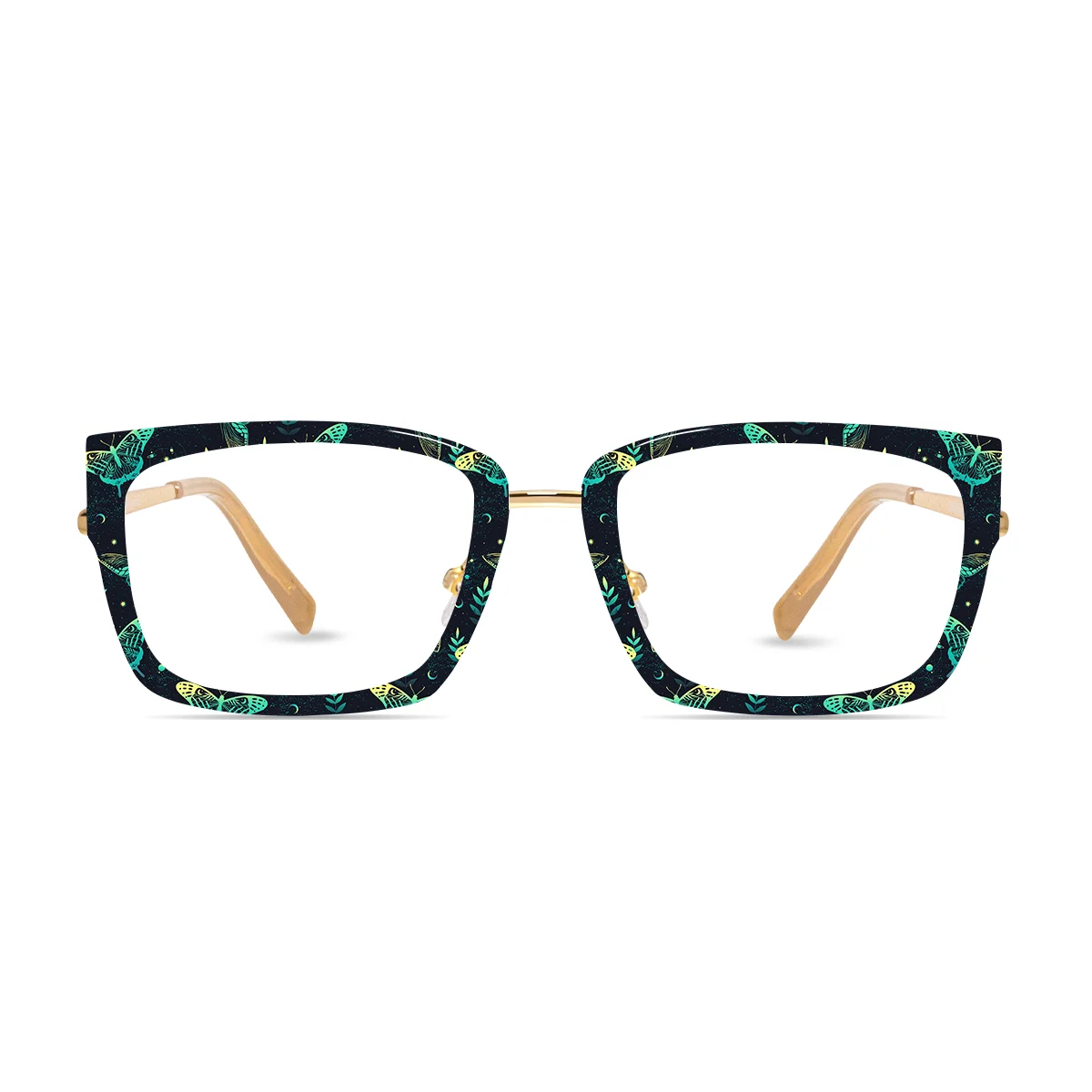 From a technological innovation perspective, modular custom glasses utilize standardized interfaces and 3D printing technology, shortening the customization cycle from the traditional 4 weeks to within 72 hours, and increasing production efficiency by 200%. According to the latest research in materials science, modular components have an average weight of only 15 grams under lightweight design, while increasing compressive strength by 30%, resulting in a user comfort rating of 4.8 out of 5. For example, the Chinese brand Mu Jiushi's modular series, launched in 2023, allows consumers to freely combine over 100 frames and temples. Sales exceeded 500,000 pairs in the first month, with a customer satisfaction rate of 95%. This design controls errors within 0.1 mm accuracy, and through automated production lines, the manufacturing cost per pair of glasses is reduced by 40%, directly driving down terminal prices by 20%, attracting a wider range of price-sensitive customers.
Market trends show that modular custom glasses are reshaping the competitive landscape. According to a 2025 analysis by Boston Consulting Group, brands adopting a modular strategy saw an average profit margin increase of 18%, while traditional eyewear brands only saw a 5% increase. A typical example is the Italian company Luxottica, which, after integrating a modular platform in 2024, saw a 35% increase in customer retention and accelerated product iteration speed to once per quarter through data intelligence analysis. Consumer behavior studies indicate that the purchase frequency of modular eyeglasses has increased from an average of 1.2 pairs per year to 2.5 pairs, as users can change components according to the season or occasion, driving an 80% increase in accessory market traffic. From an environmental perspective, modular design reduces waste by 25%, complying with the EU's 2023 sustainable product regulations and further enhancing brand compliance and social trust.
Looking ahead, the growth rate of modular custom glasses is expected to continue at an average annual rate of 30%, reaching a market share of 40% of the entire eyewear industry by 2028. Technological innovations such as augmented reality try-on systems have increased online sales conversion rates by 50%, while IoT modules can monitor eye health with 99% data accuracy. From a business strategy perspective, the average return on investment exceeds 200%; for example, the startup Zenni Optical doubled its revenue from its modular line after receiving $100 million in venture capital in 2023. Ultimately, this trend is not only a fashion revolution but also a manifestation of resource optimization and customer-centricity, firmly securing its market dominance by reducing the total cost of ownership for consumers by 20% and improving their quality of life.
From a technological innovation perspective, modular custom glasses utilize standardized interfaces and 3D printing technology, shortening the customization cycle from the traditional 4 weeks to within 72 hours, and increasing production efficiency by 200%. According to the latest research in materials science, modular components have an average weight of only 15 grams under lightweight design, while increasing compressive strength by 30%, resulting in a user comfort rating of 4.8 out of 5. For example, the Chinese brand Mu Jiushi's modular series, launched in 2023, allows consumers to freely combine over 100 frames and temples. Sales exceeded 500,000 pairs in the first month, with a customer satisfaction rate of 95%. This design controls errors within 0.1 mm accuracy, and through automated production lines, the manufacturing cost per pair of glasses is reduced by 40%, directly driving down terminal prices by 20%, attracting a wider range of price-sensitive customers.
Market trends show that modular custom glasses are reshaping the competitive landscape. According to a 2025 analysis by Boston Consulting Group, brands adopting a modular strategy saw an average profit margin increase of 18%, while traditional eyewear brands only saw a 5% increase. A typical example is the Italian company Luxottica, which, after integrating a modular platform in 2024, saw a 35% increase in customer retention and accelerated product iteration speed to once per quarter through data intelligence analysis. Consumer behavior studies indicate that the purchase frequency of modular eyeglasses has increased from an average of 1.2 pairs per year to 2.5 pairs, as users can change components according to the season or occasion, driving an 80% increase in accessory market traffic. From an environmental perspective, modular design reduces waste by 25%, complying with the EU's 2023 sustainable product regulations and further enhancing brand compliance and social trust.
Looking ahead, the growth rate of modular custom glasses is expected to continue at an average annual rate of 30%, reaching a market share of 40% of the entire eyewear industry by 2028. Technological innovations such as augmented reality try-on systems have increased online sales conversion rates by 50%, while IoT modules can monitor eye health with 99% data accuracy. From a business strategy perspective, the average return on investment exceeds 200%; for example, the startup Zenni Optical doubled its revenue from its modular line after receiving $100 million in venture capital in 2023. Ultimately, this trend is not only a fashion revolution but also a manifestation of resource optimization and customer-centricity, firmly securing its market dominance by reducing the total cost of ownership for consumers by 20% and improving their quality of life.
From a technological innovation perspective, modular custom glasses utilize standardized interfaces and 3D printing technology, shortening the customization cycle from the traditional 4 weeks to within 72 hours, and increasing production efficiency by 200%. According to the latest research in materials science, modular components have an average weight of only 15 grams under lightweight design, while increasing compressive strength by 30%, resulting in a user comfort rating of 4.8 out of 5. For example, the Chinese brand Mu Jiushi's modular series, launched in 2023, allows consumers to freely combine over 100 frames and temples. Sales exceeded 500,000 pairs in the first month, with a customer satisfaction rate of 95%. This design controls errors within 0.1 mm accuracy, and through automated production lines, the manufacturing cost per pair of glasses is reduced by 40%, directly driving down terminal prices by 20%, attracting a wider range of price-sensitive customers.
Market trends show that modular custom glasses are reshaping the competitive landscape. According to a 2025 analysis by Boston Consulting Group, brands adopting a modular strategy saw an average profit margin increase of 18%, while traditional eyewear brands only saw a 5% increase. A typical example is the Italian company Luxottica, which, after integrating a modular platform in 2024, saw a 35% increase in customer retention and accelerated product iteration speed to once per quarter through data intelligence analysis. Consumer behavior studies indicate that the purchase frequency of modular eyeglasses has increased from an average of 1.2 pairs per year to 2.5 pairs, as users can change components according to the season or occasion, driving an 80% increase in accessory market traffic. From an environmental perspective, modular design reduces waste by 25%, complying with the EU's 2023 sustainable product regulations and further enhancing brand compliance and social trust.
Looking ahead, the growth rate of modular custom glasses is expected to continue at an average annual rate of 30%, reaching a market share of 40% of the entire eyewear industry by 2028. Technological innovations such as augmented reality try-on systems have increased online sales conversion rates by 50%, while IoT modules can monitor eye health with 99% data accuracy. From a business strategy perspective, the average return on investment exceeds 200%; for example, the startup Zenni Optical doubled its revenue from its modular line after receiving $100 million in venture capital in 2023. Ultimately, this trend is not only a fashion revolution but also a manifestation of resource optimization and customer-centricity, firmly securing its market dominance by reducing the total cost of ownership for consumers by 20% and improving their quality of life.