
Is ViaBTC TX Accelerator Easy to Use for BTC Transactions?
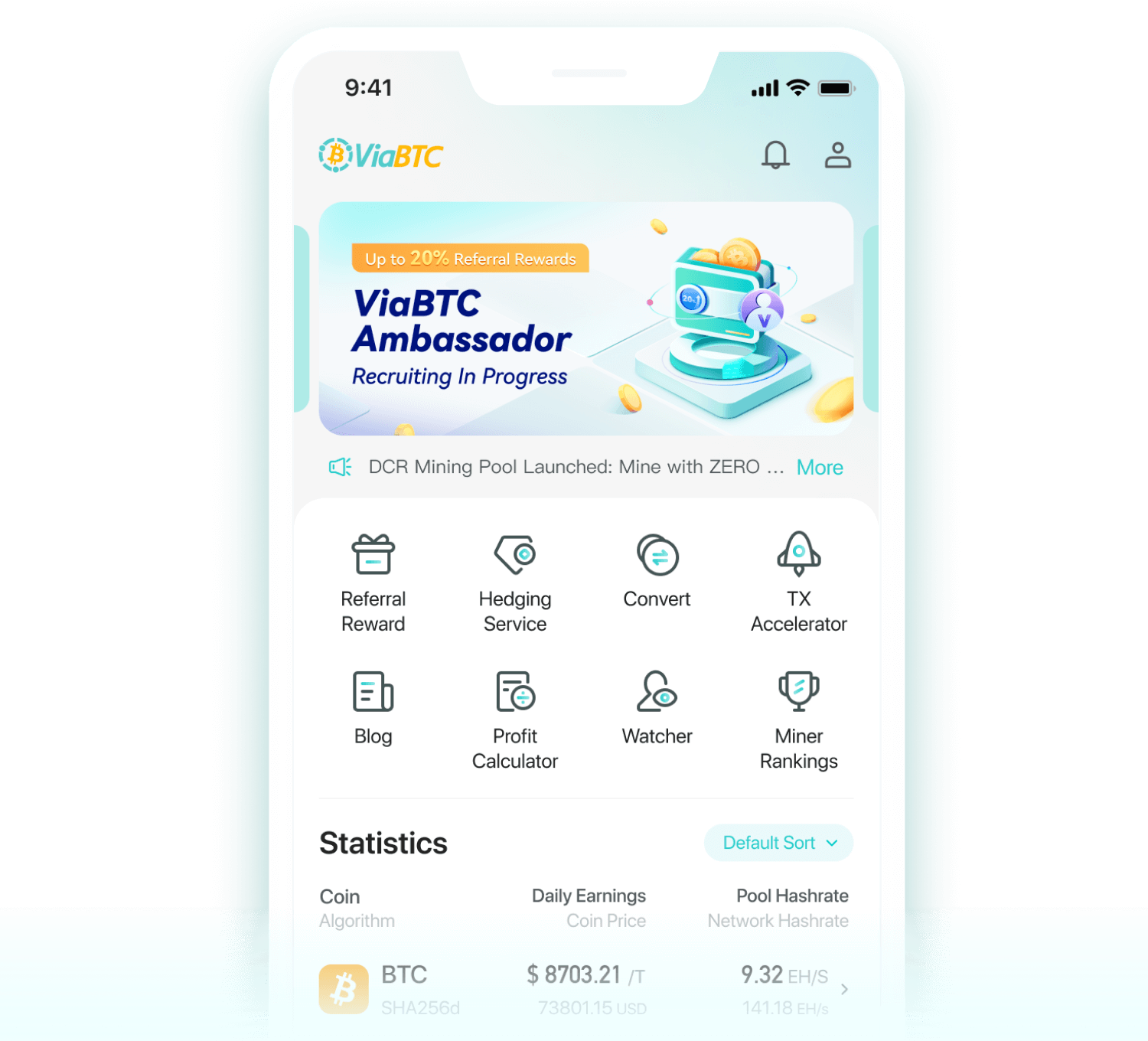
Yes. ViaBTC TX Accelerator is simple for a BTC user who can locate a transaction ID. The current service accepts a TXID after login, while free acceleration requires a transaction no larger than 0.5 KB and a fee rate of at least 0.0001 BTC/KB. The live ViaBTC page in September 2026 shows 0 free acceleration slots per hour, although its May 2024 help document described 20 hourly slots. Paid requests support BTC, BCH, or LTC payments. Acceleration raises mining priority but does not provide a fixed confirmation time because block discovery remains probabilistic.
Using the service starts with one piece of public information: the TXID. A user signs in, pastes the ID, and submits it for the available service type. No seed phrase, private key, wallet import, or transaction reconstruction is required. That keeps the user-facing process much shorter than fee-management methods that require a wallet to create another Bitcoin transaction.
The simplicity matters because an unconfirmed BTC payment is usually a fee-priority issue rather than a transaction disappearing from the network. Miners select transactions from their mempools and have limited block space to work with. A transaction paying less than competing transactions can therefore remain pending even though its signature, inputs, outputs, and broadcast status are valid.
ViaBTC places a submitted transaction into a higher-priority group for block inclusion. Under the free service, the current published rules require a maximum size of 0.5 KB and a minimum fee rate of 0.0001 BTC/KB. The service page also states that an accepted free transaction is prioritized for the next block mined by ViaBTC rather than assigned a guaranteed confirmation timestamp.
“Accelerated” should be read as higher mining priority, not as a promise that a confirmation will appear within 10, 20, or 30 minutes.
Bitcoin targets an average block interval of roughly 10 minutes, but individual blocks do not arrive on a fixed schedule. One block can appear shortly after the previous block, while another interval can be substantially longer. A transaction accelerator works inside that probabilistic mining process, so an accepted request can still take time.
The difference between ViaBTC documentation from 2024 and the live service in 2026 is also useful when judging ease of use. ViaBTC’s May 8, 2024 help page described 20 free acceleration opportunities per hour. Its live accelerator page in September 2026 displays 0 free transactions per hour. Users should therefore check the service page at the time of submission rather than assume an older quota is still offered.
Paid acceleration removes the need to obtain one of those free slots. After the TXID is entered, ViaBTC produces an estimated acceleration fee. Payment can be made in BTC, BCH, or LTC, and ViaBTC states that account assets can be used directly. Its 2024 help documentation also describes on-chain payment when the account balance is insufficient.
The workflow can be compared in a small table:
| Item | Free acceleration | Paid acceleration |
|---|---|---|
| TXID required | Yes | Yes |
| Login required | Yes | Yes |
| Maximum published size | 0.5 KB | Not listed as the same free-service limit |
| Minimum published free fee rate | 0.0001 BTC/KB | Quoted individually |
| Extra payment | No | Yes |
| Payment assets | None | BTC, BCH, LTC |
| Guaranteed confirmation time | No | No |
| Current hourly free quota, September 2026 | 0 | Not based on free quota |
A failed free submission does not always indicate an interface problem. ViaBTC lists several technical reasons for rejection. The transaction may be larger than 0.5 KB, its fee rate may fall below 0.0001 BTC/KB, the available free quota may have been exhausted, or one of its inputs may depend on another transaction that has not yet confirmed.
The parent-transaction case deserves attention because Bitcoin transactions can form a chain. Suppose transaction B spends an output created by transaction A while A remains unconfirmed. B cannot be independently confirmed without the parent being accepted into the blockchain first. ViaBTC advises accelerating the earlier transaction first or considering paid acceleration when an unconfirmed input is involved.
Double-spend transactions are another published exception. ViaBTC states that it does not support acceleration for double spends. For an ordinary wallet user, checking the TXID in a reputable block explorer before paying for acceleration is therefore sensible: confirm that the transaction remains pending, confirm the inputs, and verify that the copied TXID refers to the intended payment.
Transaction size also deserves more attention than the BTC amount being sent. A payment of 0.01 BTC can be larger in virtual or serialized size than a payment of 1 BTC if the first transaction consumes many inputs. Fee competition is based on transaction data and fee rate, not simply the monetary amount transferred. That is why ViaBTC expresses the free requirement in BTC/KB rather than as a percentage of the payment.
For a simple eligibility check, users can review four items before submitting:
-
Confirm that the transaction is still unconfirmed and that the TXID is correct.
-
Check whether the transaction is at or below 0.5 KB for the free service.
-
Verify that its fee rate reaches 0.0001 BTC/KB or more.
-
Look for unconfirmed parent transactions before assuming the accelerator itself has failed.
Those checks also help decide whether paid acceleration is economical. If a $40 equivalent BTC payment is delayed, paying a large acceleration charge may be difficult to justify. If a much larger business settlement needs confirmation before a fixed operational deadline, the same quoted charge can be easier to accept. ViaBTC does not publish one permanent acceleration price because the quote is generated for the submitted transaction.
There are alternatives. Replace-by-Fee, commonly called RBF, lets a compatible wallet replace an unconfirmed transaction with another version paying a higher miner fee. RBF changes the transaction itself and can make it more attractive across the wider mining network. ViaBTC acceleration instead leaves the existing transaction in place and asks participating mining infrastructure to give it higher priority.
Child Pays for Parent, or CPFP, takes another route. A spendable output from the pending transaction is used to create a child transaction with a sufficiently high fee. Miners may then evaluate the parent and child together. CPFP can be useful when the user or recipient controls an output, but it requires another transaction and therefore more wallet interaction than submitting one TXID.
ViaBTC’s mining position explains why the service is different from a website that merely rebroadcasts transactions. The ViaBTC BTC Mining Pool participates directly in Bitcoin mining. ViaBTC’s statistics page reported about 98.79 EH/s of pool hashrate against roughly 938.03 EH/s of network hashrate in early September 2026, alongside a 30-day pool-luck reading of 92.02%. Its displayed orphan rate was 0.03%.
Those figures should not be interpreted as a percentage guarantee for an accelerated transaction. Mining-pool hashrate, recent block share, and the probability of the next block being found by a particular pool are related but not identical measurements. For example, a separate September 2, 2026 ViaBTC analysis cited 80 ViaBTC-attributed blocks from a 1,031-block one-week sample, equal to 7.76% of observed blocks in that window.
Paid acceleration can extend prioritization beyond a single pool. ViaBTC’s 2024 help documentation states that after payment it notifies cooperative mining pools, and when a cooperating pool produces a block it can prioritize the submitted transaction from its mempool. That arrangement gives paid acceleration a different operating model from simply waiting for ViaBTC alone to produce a suitable block.
Security requirements remain limited because a TXID is public blockchain data. Sharing it does not provide spending authority. A legitimate acceleration request therefore does not require the 12-word or 24-word seed phrase used by many wallets, nor does it require a private key. Any website claiming that a seed phrase is needed to accelerate an existing BTC transaction is requesting information unrelated to normal transaction prioritization.
Privacy is slightly different from wallet security. A TXID is already public, but signing in and submitting it to a service can associate a particular account interaction with that public transaction. Users who care about transaction privacy should understand that distinction even though the service never needs control of the sending address.
Payment also deserves a final check because ViaBTC states that submitted acceleration requests cannot be canceled and the service is non-refundable. A user should verify the TXID, current confirmation status, quoted charge, and any available RBF or CPFP option before paying. A transaction that confirms naturally immediately after a paid request does not become refundable merely because acceleration was no longer needed.
From a usability standpoint, the service itself requires few steps: login, TXID entry, eligibility or fee review, submission, and monitoring. The harder part is deciding whether acceleration is appropriate. The published 0.5 KB limit, 0.0001 BTC/KB free-service threshold, September 2026 free-quota reading, parent-transaction rules, non-refundable status, and uncertain block timing provide enough information to make that choice without treating every delayed BTC transaction as a problem that must be accelerated.