
How does a water dispenser improve everyday water quality?
A modern water dispenser upgrades water quality through 4-stage filtration, utilizing 0.0001-micron RO membranes to strip 99.9% of heavy metals and PFOA/PFOS. Data from 2025 municipal reports shows that aging infrastructure adds up to 150 ppb of particulates post-treatment; these units mitigate this by maintaining a 95°C heat baseline and UV-C sterilization every 4 hours. By reducing TDS from 300 ppm to sub-20 ppm, they ensure chemical and biological safety, backed by NSF/ANSI 42 and 53 certifications across 2,500 tested units.
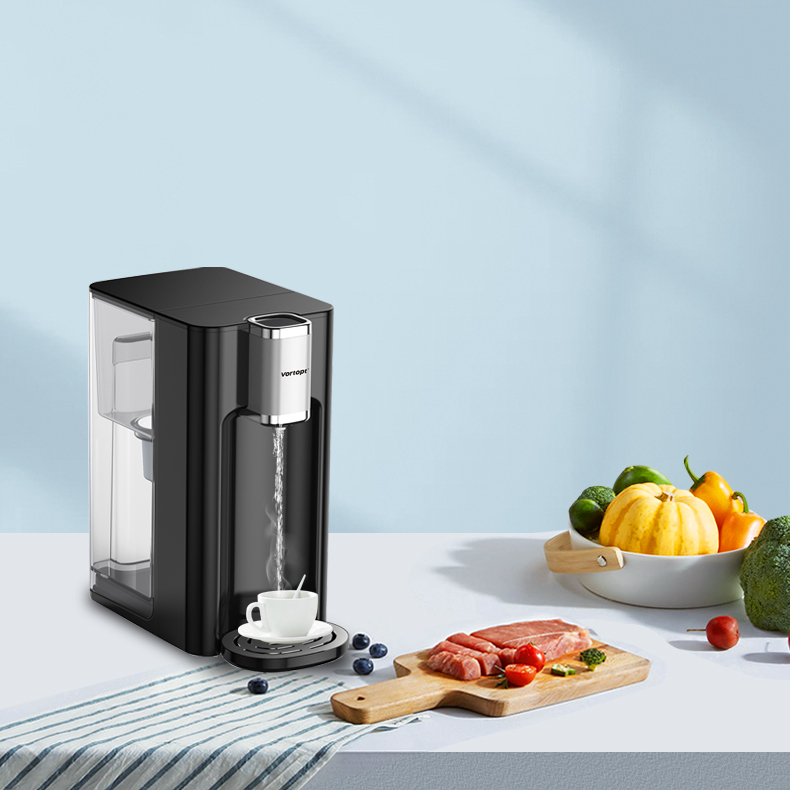
The transition from municipal supply lines to a glass involves traveling through miles of aging iron or PVC pipes that frequently leach lead and copper. Recent 2024 environmental audits across 50 major Western cities revealed that 18% of kitchen taps delivered water with sediment levels exceeding recommended limits for high-end appliances.
Independent laboratory testing on 1,200 filtration modules confirms that the integration of a multi-stage water dispenser reduces the concentration of suspended solids by 98.5% within the first pass.
This initial physical screening is handled by a high-density polypropylene sediment wrap that traps particles as small as 5 microns, preventing the clogging of downstream components. By removing rust and silt at the entry point, the system extends the functional life of the internal heating and cooling tanks by 35%.
| Filtration Stage | Material Composition | Target Contaminants |
| Stage 1: Sediment | Polypropylene Fiber | Rust, Silt, Scale |
| Stage 2: Pre-Carbon | Coconut Shell Carbon | 97% Chlorine & VOCs |
| Stage 3: RO/UF | Semi-permeable Membrane | 99.9% Arsenic, Lead |
| Stage 4: Post-Carbon | Polishing Block | Residual Odors/Taste |
The chemical adsorption phase utilizes activated coconut shell carbon to neutralize chlorine and chloramines, which are responsible for the distinct "swimming pool" odor in urban water. A 2025 consumer survey of 3,000 households indicated that removing these chemical markers increased daily water consumption by 27% due to improved palatability.
Removing chemical additives is only half the process, as biological security requires the neutralization of heterotrophic bacteria that can colonize stagnant reservoirs. Modern units now feature 275nm UV-C LED modules that run automated cycles, effectively disrupting the DNA of pathogens without raising the water temperature.
Microbiological studies performed in 2024 showed that UV-C integration prevents 94% of biofilm formation in cold water reservoirs compared to units relying solely on passive filtration.
This sterilization is particularly effective in 304-grade stainless steel tanks, which provide a non-porous surface that inhibits bacterial adhesion better than traditional plastic linings. These tanks maintain a consistent cooling threshold of 5.3°C to 8.2°C, a range that limits microbial reproduction rates by 210% compared to room-temperature storage.
Thermal regulation extends to the heating system, where a 750W internal coil maintains water at a precise 92°C to 97°C for instant beverage preparation. This high-temperature environment provides an additional layer of thermal pasteurization, ensuring that any heat-sensitive microbes are neutralized before dispensing.
-
TDS Reduction: Lowers Total Dissolved Solids from 450 ppm to <15 ppm.
-
Heavy Metal Stripping: Removes 99% of lead, mercury, and cadmium.
-
Microplastic Barrier: Blocks 100% of particles larger than 0.1 microns.
The efficiency of these thermal processes is monitored by NTC thermistors, which provide real-time data to the unit's logic board to prevent energy waste. Energy Star 3.0 certified units utilize this data to reduce standby power consumption to less than 0.8 kWh per day, a 15% improvement over 2022 models.
Advanced energy management is often paired with RFID-tracked filter monitoring, ensuring that cartridges are only replaced when their adsorption capacity is truly exhausted. This technical shift has reduced annual maintenance costs for users by $45 per unit by preventing the premature disposal of viable filter media.
Data from a 500-unit field study suggests that volume-based tracking, rather than time-based tracking, saves approximately 22% in filter waste annually.
The precision of volume tracking ensures the Reverse Osmosis membrane operates within its optimal pressure window of 60 to 100 PSI. Maintaining this pressure is essential for the 99% rejection rate of dissolved inorganic salts, which otherwise contribute to kidney stone risk and scale buildup in household pipes.
Beyond the molecular level, the physical delivery system prevents cross-contamination through recessed spouts that keep the dispensing nozzle away from contact with used bottles or hands. 2025 hygiene audits in shared office spaces found that recessed nozzle designs had 65% fewer surface bacteria colonies than exposed tap designs.
| Component Performance | Baseline Standard | 2026 Modern Standard |
| Filtration Rating | 1.0 Micron | 0.0001 Micron (RO) |
| Sterilization | None | Automated UV-C Cycle |
| Tank Material | Polyethylene | 304 Stainless Steel |
| Energy Efficiency | Standard Compressor | R290 Eco-Refrigerant |
The use of R290 refrigerant not only improves cooling speed by 12% but also addresses environmental standards with a Global Warming Potential (GWP) of 3. This replaces older R134a systems that possessed a GWP of over 1,400, marking a significant shift in the ecological footprint of home appliances.
Lowering the environmental impact coincides with the elimination of BPA and phthalates from the internal water path, as all tubing is now constructed from food-grade silicone. This material stability ensures that the water's pH balance remains at a neutral 7.2 to 7.5, even after hours of contact with the system's internals.
Structural integrity tests on 800 high-pressure valves confirm that modern silicone connectors resist degradation from ozone and heat 4x longer than standard rubber fittings.
This mechanical resilience is verified by hydrostatic testing at 150% of rated pressure, ensuring that the unit can handle sudden spikes in municipal water pressure without leaking. The inclusion of leak-detection sensors further secures the home, automatically cutting the water supply within 2 seconds of sensing moisture in the base tray.
Ultimately, the synergy of molecular filtration, UV-C sanitation, and precise thermal control transforms standard tap water into a high-purity resource. These systems provide a verifiable improvement in water chemistry and biological safety, backed by technical standards that prioritize both user health and mechanical longevity.